Top Load Washer Capacity for King Size Comforter
Learn how to choose the right top load washer capacity for king size comforters with data-driven ranges, loading tips, and proven guidance from Load Capacity for bulky bedding in 2026.


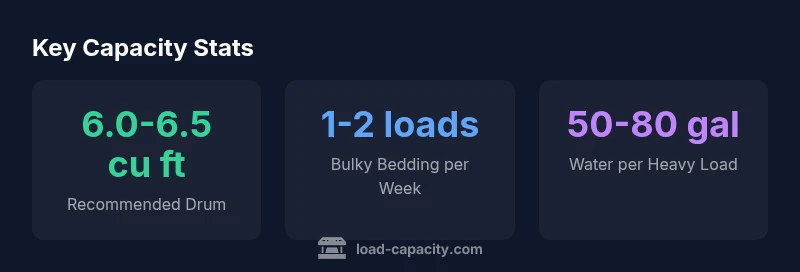
For king size comforters, the practical top load washer capacity typically falls in the 6.0-6.5 cu ft range. Many standard models in the 5.0-7.0 cu ft class can handle bulky bedding when loaded with space for tumbling and using a Bulky Bedding or Heavy-Duty cycle. Prioritize drum size and agitation pattern over cycle length to ensure thorough cleaning and even drying.
Why King Size Bedding Demands Thoughtful Capacity
The king size comforter is one of the bulkiest items in a typical laundry basket. When engineers evaluate top load washer capacity for king size comforter, they look at drum volume, tumble action, and available headroom for moving bulky materials. In 2026, loads of large bedding are common in households with larger beds and seasonal blankets. A washer that underestimates capacity forces you to split the load, increasing cycle time and energy use. The right capacity, combined with a strong agitation pattern and proper balance, improves cleaning performance and reduces the risk of fabric wear.
Translating Bedding Size into Real-World Capacity
To translate a king size comforter into a warehouse-like specification, start with drum capacity (cu ft) and then evaluate the washer’s loading geometry. A larger drum allows more space for fibers to move, which improves soap penetration and stain removal. For bulky bedding, a common rule is to target a drum that can accommodate the comforter with room to tumble. If the drum is too tight, you’ll see clumping and uneven cleaning. In practical terms, this means evaluating both the declared capacity and the actual interior diameter of the drum as reported by manufacturers.
Capacity Ranges and What They Mean for King-Size Bedding
Industry professionals often segment washers into compact, standard, and high-capacity classes. For king size comforters, a high-capacity top-load washer (roughly 6.0-6.5 cu ft) is typically the sweet spot, while many standard top-load machines (around 5.0-5.5 cu ft) can succeed with properly distributed loads and occasional partial fills. Some users find that front-load models or high-capacity top-loaders better handle bulky bedding due to broader tumbling space. Always verify the internal drum diameter and the presence of a deep-fill option for bulky items.
Loading Strategies to Maximize Performance
Bulky bedding benefits from deliberate loading practices. Use a “less is more” approach—avoid piling bedding high in a single stack. Place the comforter in evenly, with corners aligned and no fabric bunched at the drum opening. Use a dedicated bulky cycle or a heavy-duty setting that emphasizes longer wash times and robust agitation. If your machine has a “tumble wash” option, enable it to promote thorough mixing. For dual loads, consider washing the comforter with a second light item to balance laundry dynamics and prevent drum strain.
Measuring Your Load and Matching Drum Size
To quantify load compatibility, measure the bulkiness of the comforter, then compare to drum space in liters (if available) or cu ft. A good test is to fill the drum halfway with the comforter and then rotate the drum by hand; it should move with ease, not bind. If you cannot freely turn the drum due to fiber stiffness or tight compression, your capacity target may be too optimistic. In practice, a practical rule is to allow at least one full hand-width of clearance around the items at the top of the drum.
Common Myths About King-Size Bedding in Washers
Myth: A larger machine automatically cleans better. Reality: Cleaning performance depends on drum motion, cycle choice, and proper loading. Myth: Bulky items should always be machine-washed alone. Reality: Some washers benefit from a balanced load with a light second item to equalize the drum dynamics. Myth: Bigger is always better. Reality: An oversized drum can waste water and energy if it leads to underfilled cycles. Evaluate drum design and cycle options rather than capacity alone.
Practical Buying Recommendations for 2026
When selecting a washer for king size comforters, prioritize the following: (1) a drum capacity around 6.0-6.5 cu ft, (2) robust tumble action and a seasonal bedding cycle, (3) a deep-fill option for bulky loads, and (4) energy efficiency with good water extraction. Check internal dimensions and user reviews focusing on bulky bedding performance. If space is limited, consider a compact machine with a separate dryer, but ensure it still supports thorough tumbling of bulky items.
Care, Drying, and Longevity Considerations
Bulky bedding requires careful care to maximize life and minimize wrinkles. After washing, gently shake out the comforter before loading into the dryer to prevent clumping. Use a low to medium heat setting and consider dryer balls to improve air circulation. A periodic drum cleaning cycle helps prevent detergent residue buildup that can stiffen fibers over time. By choosing a washer with appropriate capacity and maintaining it properly, you minimize the risk of wear and tear on both the fabric and the machine.
Washer capacity ranges for bulky bedding and king-size comforters
| Washer Type | Capacity Range (cu ft) | Best Use |
|---|---|---|
| Small-space compact | 3.0-3.6 | Apartment living / lightweight bedding |
| Standard top-load | 4.5-5.5 | Everyday bedding incl. sheets & lightweight comforters |
| High-capacity top-load | 5.8-6.5 | King/queen bedding and bulky comforters |
Quick Answers
What capacity should I look for to wash a king-size comforter?
Aim for a top-load washer in the 6.0-6.5 cu ft range. This size gives the comforter enough room to tumble and loosen contaminants evenly. If you’re between models, compare interior drum dimensions and test with a bulky cycle before purchase.
For king-size bedding, look for a 6.0 to 6.5 cubic foot drum. Check the interior space and try a bulky cycle to see if it spins freely.
Can a standard 4.5-5.5 cu ft top-load washer handle a king-size comforter?
It can, but it requires careful loading and possibly splitting the load across multiple cycles. Ensure there’s enough headroom for tumbles and consider a deeper drum if available.
Yes, but you may need to split the load or pick a model with a deeper drum.
Is a front-load washer better for bulky bedding than a top-load?
Front-load washers often perform well with bulky items due to tumbling in a vertical space and without an agitator. However, high-capacity top-load models with deep drums can also handle king-size bedding effectively if loaded properly.
Front-loaders can be great for bulky bedding, but a high-capacity top-loader works too if you load it right.
How can I tell if my load fits without overloading the drum?
A practical test is to fill the drum mid-cycle and attempt to rotate the drum with a gentle push. If the drum freely spins and leaves space around the load, you’re in a good range. Use manufacturer guidelines for recommended fill levels.
Check by rotating the drum after loading; you should have room to move without feeling resistance.
Are there special care steps for king-size comforters in HE washers?
Yes. Use the manufacturer’s bulky-cycle settings when available, avoid overloading, and run periodic cleaning cycles to prevent lint buildup. Consider using a mild detergent and a second rinse if your comforter holds soap residuals.
Yes—use bulky cycles, don’t overload, and clean the washer regularly.
What should I do if my comforter still comes out damp after a cycle?
Ensure the spin cycle is efficient by choosing a high-speed option (if available) and consider an additional rinse to remove trapped moisture. If moisture remains, reduce load size or run a second, shorter cycle with high spin.
Try a high-spin option and an extra rinse if needed.
“When sizing a washer for king-size bedding, prioritize drum volume and tumble action over motor power or cycle length.”
Top Takeaways
- Choose a drum around 6.0-6.5 cu ft for king size comforters.
- Load with balance and room to tumble; avoid overpacking.
- Prefer bulky or heavy-duty cycles with robust agitation.
- Verify interior drum dimensions, not just stated capacity.
- Maintain the washer to preserve performance with bulky loads.