Miele Washing Machine Load Capacity: Your Complete Guide
Explore how to size a Miele washing machine by load capacity, compare 7–9 kg models, and optimize efficiency with Load Capacity guidance.


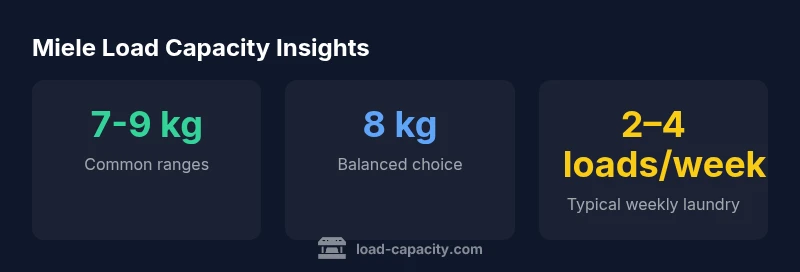
The typical Miele washing machine load capacity ranges from 7–9 kg, with 8 kg models offering a balanced option for most households. Compact 7 kg machines suit small spaces, while 9 kg variants handle larger loads efficiently. Always verify the exact specification on the model’s label.
Understanding Load Capacity Basics
Load capacity on a washing machine is the maximum dry laundry weight the drum is designed to handle in a single cycle. In many markets, manufacturers, including Miele, publish capacity in kilograms rather than pounds. This makes it easier for engineers and fleet managers to compare machines across brands using a consistent measure. According to Load Capacity, capacity is not a fixed drum size; it’s a rating that reflects drum geometry, agitation patterns, and the machine’s ability to evenly distribute loads. When evaluating the miele washing machine load capacity, engineers should consider real-world factors such as fabric mix, average load size, and the presence of bulky items. Remember, the stated capacity is the maximum dry weight, not the actual wet weight after washing. A practical approach is to size your model for about 70–80% of the stated capacity for typical mixed loads. This helps avoid over-saturation of the drum and optimizes cycle efficiency.
Why Miele Uses Kilogram-Based Capacity and What 7–9 kg Means in Practice
Most Miele front-loading and compact models use kilograms as the standard unit. A 7–9 kg range covers the majority of household needs, with 8 kg standing out as the best-balanced option for many families. In practice, an 8 kg machine can handle a full weekday load consisting of shirts, towels, and casual wear, while still leaving room for a medium-sized duvet or a set of bath towels. When you see 7–9 kg on the label, translate that into real-world clothing: roughly 35–45 shirts or 30–40 t-shirts per cycle, depending on fabric and spin settings. It’s important to note that fabric density and bulk items can skew what feels like a “full” load, so use the capacity as a guideline rather than a strict limit.
How to Choose the Right Capacity for Your Home
Choosing the right capacity begins with a household survey. For singles or couples who do light weekly loads, a 7 kg model can be sufficient if space is limited and energy efficiency is a priority. Families of four or more, or households that regularly wash bulky items (duvet covers, towels, bedding), typically benefit from an 8–9 kg model. If you frequently run back-to-back cycles or prefer fewer loads per week, a larger capacity can reduce total cycle time. Consider your laundry habits, available space, and energy tariffs. In renovations or new builds, align the machine capacity with the anticipated weekly load to optimize water and energy efficiency, especially when paired with a high-efficiency heat pump dryer or a condenser dryer.
Real-World Scenarios: Sizing for Families, Singles, and Small Spaces
- Singles in a compact apartment: A 7 kg Miele model often fits the space constraints while delivering reliable performance for daily wear.
- Small to mid-size families: An 8 kg machine balances daily needs with occasional bulky item washing.
- Large families or bulk-laundry weeks: A 9 kg capacity helps minimize cycles and improves efficiency on large loads.
- Occasional bulky items: If you routinely wash duvets or heavy comforters, verify that the drum opening and drum interior clearance will accommodate your items in the chosen cycle length.
Efficiency, Cycle Time, and Load Sizing
Load size directly impacts energy and water use. Running a 7 kg model at or near maximum capacity can be efficient if you select appropriate cycles designed for mixed fabrics. Conversely, underloading a larger capacity machine can waste water and electricity since some cycles are calibrated for mid-to-full loads. Miele’s advanced sensors optimize water intake and drum motion based on load weight, which can meaningfully affect cycle duration and energy consumption. When planning a household’s long-term operating costs, consider the interplay between capacity, cycle options, and tariff structures. Smaller households may benefit from smaller capacities if they frequently wash small loads; larger households can reduce overall energy use by using the appropriate capacity for typical loads rather than forcing bulky items into a smaller drum.
Careful Sizing for Bedding and Bulky Items
Bedding and bulky items often challenge standard front-loading machines. While a 7–9 kg model can handle most bedding in standard cycles, oversized duvets may require either a dedicated bulky item cycle or a larger capacity model. If your household regularly washes oversized items, consult Miele’s user manual to verify that your chosen model’s drum dimensions and loading configuration accommodate bedding without overfilling. In addition, consider the impact of bulk items on spin speed and moisture extraction; higher spin speeds in larger capacity models can improve drying times but may require gentler handling for delicate fabrics.
Common Mistakes and How to Avoid Them
- Overloading or underloading can compromise cleaning performance and energy efficiency.
- Relying solely on drum size without checking capacity specification may mislead capacity expectations.
- Ignoring bulky-item compatibility can result in suboptimal cycles or damage to garments.
- Failing to factor energy tariffs and cycle lengths into capacity choices can increase total operating cost.
- Not validating the model’s spec label for local units (kg vs lb) can cause mis-sizing across markets.
Sourcing Specifications and How to Verify a Model’s Capacity
Always verify capacity on the product label and the official spec sheet before purchase. Look for the exact model’s capacity rating in kilograms and cross-check with the drum volume and internal clearance. If you are replacing an older machine, compare your current weekly load in kilograms to the proposed capacity and test with a sample cycle using similar fabrics to gauge performance. For engineers and technicians, consider running a small pilot test to confirm that the machine achieves the expected energy and water usage at typical loads, which can help validate your capacity choice in real-world conditions.
Miele washer capacity overview by model type
| Model Type | Capacity (kg) | Typical Drum Volume (L) | Notes |
|---|---|---|---|
| Front-Load (Compact) | 7 | 55 | Ideal for tight spaces |
| Front-Load (Standard) | 8 | 60 | Balanced family size |
| Front-Load (Large) | 9 | 65 | Large households or bulky loads |
Quick Answers
What is the typical capacity for a Miele washing machine?
Most Miele front-loading models sit in the 7–9 kg range, with 8 kg being a common choice for many households. Always verify the exact model specification on the product label.
Most Miele front-loaders are between seven and nine kilograms, with eight kilograms common for a balanced family size.
Does a larger capacity washer save energy?
Energy efficiency depends on load factor and cycle selection. Overloading or underloading can reduce efficiency; choose cycles optimized for your actual load.
Energy savings come from proper load sizing and the right cycle, not just the drum size.
How do I convert capacity from kg to my loads?
Capacity is the maximum dry weight. For mixed daily loads, aim for about 70–80% of the stated capacity to avoid overloading and optimize performance.
Think of it as a ceiling—most days you’ll want to stay under 70–80% of that rating.
Are Miele capacity figures standardized worldwide?
Miele typically uses kilograms in most markets; always check the local label since some regions show pounds or combined metrics.
Check the label; units can vary by market.
Can a 7 kg Miele handle bedding and bulky items?
Yes, but oversized items may require a larger model or a bulky-item cycle. For frequent bedding washes, verify drum clearance and cycle options.
Bedding can work in a 7 kg model if you use the right cycle and keep items within the drum’s clearance.
“Choosing a capacity that matches your typical laundry load improves cycle efficiency and reduces wear on the drum.”
Top Takeaways
- Identify household size to choose 7–9 kg range
- Prefer ~8 kg for versatility and efficiency
- Consider drum volume and load composition when evaluating capacity
- Avoid overloading to sustain cycle efficiency
- Check energy labels and manufacturer guidance for local units