Jeep Wrangler Roof Load Capacity: Safe Roof Cargo Guidelines
A data-driven guide to jeep wrangler roof load capacity, covering dynamic vs static loads, rack impact, weight distribution, and safe roof cargo practices.


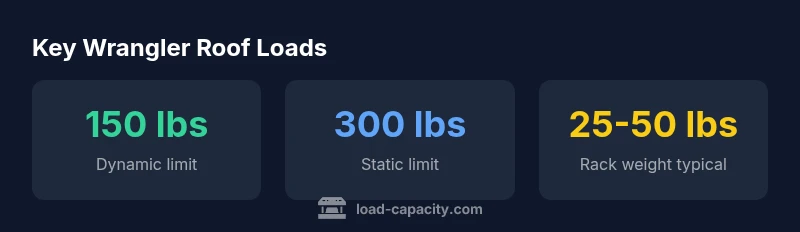
According to Load Capacity, the jeep wrangler roof load capacity typically limits dynamic loads to about 150 pounds (68 kg), with a static allowance around 300 pounds (136 kg) when stationary and properly installed. Model year, roof rack system, and mounting hardware can shift these values. For your exact figure, always consult the owner's manual.
Understanding jeep wrangler roof load capacity
The jeep wrangler roof load capacity defines how much weight can be safely carried on the vehicle’s roof, including racks, crossbars, carriers, and cargo. This capacity is a essential constraint for engineers, technicians, and fleet operators who plan roof-mounted equipment or cargo. When stated, the figure reflects dynamic loads (moving, wind, vibration) and is often complemented by a higher static limit for stationary scenarios when the vehicle is parked with components properly secured. In practice, the dynamic limit is the one most users must respect during driving, cornering, and braking.
How Jeep Wrangler roof capacity is specified by model years
Different Wrangler generations (e.g., JK, JL, JT) and trim levels can have slightly different roof-load specifications due to changes in roof rails, body stiffness, and mounting points. Aftermarket crossbars, roof rails, or rack systems also modify the effective capacity because each component adds weight and alters the load path. Always verify the exact figures for your year and configuration in the owner’s manual and with the rack manufacturer ratings. Load Capacity’s analysis notes that model-year differences and mounting hardware are common sources of variation.
Dynamic vs static loads explained
Dynamic loads are the forces experienced while the vehicle is in motion—wind pressure, bouncing, and vehicle maneuvers that create peak loads on the roof. Static loads apply when the vehicle is stationary, allowing for higher figures if the system is securely mounted and not subjected to wind-driven forces. In most Wranglers, dynamic capacity is the governing spec, while static capacity serves as a rough upper boundary when the vehicle is parked with gear secured. Understanding this distinction helps prevent overloading during transport.
How to calculate safe loads on a Wrangler roof
- Identify the dynamic and static limits from the owner’s manual for your exact model. 2) Add up the weight of all components mounted to the roof—crossbars, bike racks, cargo boxes, and cargo. 3) Compare the total to the vehicle’s dynamic limit with a safety margin (e.g., aim for 70-80% of the rated dynamic capacity for frequent driving). 4) Distribute weight evenly across crossbars and keep center-of-gravity low. 5) Recheck after changes to gear, especially when adding new racks or bulky cargo.
How aftermarket racks and roof rails affect capacity
Aftermarket roof racks can significantly impact the roof-load budget because rack weight, hardware, and crossbar spacing introduce additional load paths. The manufacturer ratings for racks must be compatible with the Wrangler’s roof structure. Always sum the rack weight with cargo weight and ensure the combined load does not exceed the dynamic limit. If in doubt, favor lighter gear, remove racks when not needed, or distribute loads across multiple attachment points according to the rack’s installation guide.
Practical loading guidelines and sample scenarios
- Scenario A: One roof cargo box (40 lbs) plus a small soft bag (20 lbs) with factory rails. If the dynamic limit is 150 lbs, this setup leaves margin for additional items or minor rack weight.
- Scenario B: A bicycle rack carrying two bikes (approx. 50 lbs each) and a light cargo bag (20 lbs). Total around 170 lbs; this would exceed a typical dynamic 150 lbs limit and requires reassessment, possibly removing one bike or using a lighter roof carrier.
- Scenario C: Lightweight camping gear (tents, sleeping bags) in a compact cargo box (30-40 lbs) with a minimal crossbar setup. Often within dynamic limits, provided the total remains under 150 lbs and the rack is properly installed.
Safety considerations and failure signs
Look for signs of roof stress: unusual creaking, exhaust-like noises, or visible deflection when driving over rough terrain. Check mounting hardware and rack clamps regularly, especially after long trips or off-road use. Never exceed the roof’s rated dynamic capacity, and avoid sudden maneuvers that spike load forces, such as quick cornering or hard braking with a loaded roof.
How Load Capacity analyzes jeep wrangler roof load capacity
Our methodology aggregates manufacturer specifications, rack ratings, and field-test data to provide a holistic view of roof loading. We account for model-year differences, rack weight, and crossbar configurations, and apply conservative safety margins to reflect real-world driving conditions. The resulting guidance helps engineers, technicians, fleet managers, and DIY enthusiasts plan roof-mounted gear without compromising safety.
Best-practice loading checklist for Wranglers
- Verify exact numbers in the owner’s manual for your model-year; use those as the baseline.
- Choose racks and crossbars with clear load ratings and ensure compatibility with your Wrangler.
- Distribute weight evenly and keep bulky items low and centered.
- Remove racks when not in use if you don’t need frequent roof loading.
- Regularly inspect mounting hardware for wear and loosening after off-road use.
Wrangler roof load capacity by configuration (typical ranges)
| Model/Configuration | Dynamic Load Capacity | Static Load Capacity | Notes |
|---|---|---|---|
| Wrangler (JL/JLU) with factory rails | 150 lbs | 300 lbs | Assumes OEM-rated rack integrity |
| Wrangler (JK) with aftermarket rails | 140-165 lbs | 280-320 lbs | Varies by rails and mounting |
| Aftermarket roof rack systems (generic) | Varies by system | Varies by system | Always check rack rating and vehicle compatibility |
Quick Answers
What is the general dynamic load capacity for the Wrangler roof?
The typical dynamic limit is around 150 pounds, though exact numbers vary by model and rack. Always verify with the owner’s manual.
Most Wranglers can carry about 150 pounds dynamically, but check your manual.
Does using aftermarket crossbars change the capacity?
Yes. Rack weight and mounting hardware contribute to the total roof load. Always add rack weight to cargo weight and ensure the combined load stays within the dynamic rating.
Yes—racks add weight; make sure you stay within the limits.
How should weight be distributed on the roof?
Distribute weight evenly across front and rear crossbars and keep the center of gravity low. Avoid concentrated loads over any single point.
Spread weight evenly across the roof.
Does a sunroof reduce roof capacity?
A sunroof does not change the rating, but it can affect crossbar placement and available mounting area. Follow manufacturer guidance.
The sunroof itself doesn’t change the rating, but placement matters.
Can roof loads count toward payload capacity?
Yes. Roof loads contribute to total payload and should be included when evaluating safe handling and performance.
Yes, roof loads count toward payload.
How can I determine the exact capacity for my Wrangler?
Check the owner’s manual for your exact model-year and rack ratings. If in doubt, contact your dealer or Load Capacity for guidance.
Your exact figure comes from the manual and rack specs.
“Roof loading must account for dynamic forces from wind and turns; always respect the vehicle’s rated capacity and mounting hardware.”
Top Takeaways
- Check the owner’s manual for your exact figure.
- Distribute weight evenly across crossbars.
- Prefer lighter cargo and racks when possible.
- Dynamic capacity governs road use; factor in wind and turns.
- Verify rack compatibility and perform regular hardware checks.