How to Check Forklift Load Capacity During OSHA 30 Training
Learn how to check forklift load capacity, read data plates, evaluate attachments, and apply OSHA 30 principles with practical steps and examples.


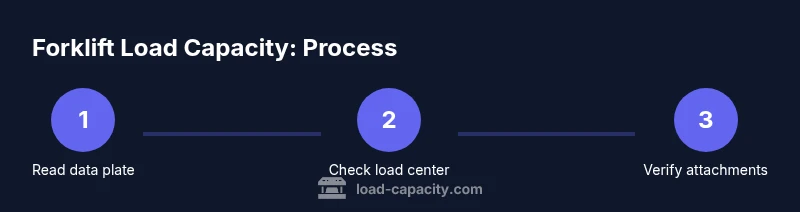
You can check the forklift's load capacity by reading the data plate on the forklift, consulting the manufacturer’s manual, and verifying the rated capacity against the load before each lift. In OSHA 30 training, confirm the rated capacity, account for attachments, load center, and condition of the forklift, and use the safe working load chart to stay within limits.
Why Forklift Load Capacity Matters
According to Load Capacity, understanding forklift load capacity is essential for safe operations and regulatory compliance, especially when preparing for OSHA 30 training. A forklift that is operated beyond its rated capacity is at a higher risk of tipping, damaging the load, or stressing the hydraulics and masts. In workplace settings, a clear grasp of load capacity reduces injuries, protects assets, and helps teams plan lifts with predictable outcomes. The data plate provides the baseline rating, while the manufacturer’s manual explains the effect of attachments, aging components, tire condition, and uneven surfaces on capacity. By mastering these concepts, engineers, technicians, and field crews can create safer, more productive workflows. This section sets the stage for how you practically verify and apply capacity limits in daily operations, from reading plates to adjusting for attachments and center of gravity.
Reading the Data Plate and Manufacturer's Manual
The data plate on a forklift shows the rated capacity for the lift, the load center distance at which that capacity applies (commonly 24 inches), and whether any attachments affect the rating. The manual expands on how attachments (like forks, jibs, or clamps) reduce capacity, how tire wear alters stability, and how surface conditions change safe maneuvering. In practice, you should always cross-check the plate with the manufacturer’s guidelines and any facility-specific policies. This knowledge helps you avoid overloading, reduces risk during OSHA 30 compliance checks, and supports consistent decision-making during lifts.
The Role of OSHA 30 Training in Load Capacity
OSHA 30 training emphasizes hazard recognition, safe operation, and compliance with maintenance and inspection requirements for powered industrial trucks. Understanding load capacity is a core safety competency that protects workers and equipment. The training covers how to identify rated capacity, how to interpret load centers, and how attachments affect strength and stability. As a result, technicians and managers can audit lifts, spot potential overloads, and enforce limits before injuries occur. This section connects theory from OSHA 30 to practical, everyday forklift use.
How to Verify Load Capacity Before Each Lift
To verify capacity before lifting, start with the data plate and chart. Check for the exact load center and any attachments, confirm the load’s weight, and assess whether the forklift, surface, and environment are within safe conditions. If the load exceeds the rating at the current center, do not lift; instead, reduce the load or adjust the center, reconfigure the load with appropriate attachments, or use a different forklift. Document the check and keep the data plate visible during the lift for quick verification.
Common Scenarios: Attachments, Center of Gravity, and Load Center
Attachments change the effective load center and often reduce capacity. A jib or clamp increases the distance from the fulcrum, which lowers the safe load. The same load may be safe with plain forks but unsafe with an attachment if the center of gravity shifts beyond the rated center. Always verify the rated capacity for the exact configuration in use, including forks, attachments, and the load path. If you aren’t sure, err on the side of caution and consult the operator’s manual or a supervisor.
Practical Calculation Examples
Consider a forklift with a rated capacity of 5,000 lb at a 24-inch load center. If you attach a jib that moves the load center to 36 inches, the manufacturer’s chart typically shows a reduced capacity (for example, around 4,000 lb or less, depending on the model). If you need to lift a 3,800 lb load with the 30-inch center, you would verify that the reduced capacity still accommodates the shift. Always compare the actual load and its center to the chart for your exact configuration. This practical approach helps you adhere to OSHA 30 requirements and minimize risk.
Reading the Load Capacity Chart and Stability Triangle
The stability triangle (front axle and two rear wheels) defines tipping risk with side-to-side and front-to-back forces. Reading the capacity chart alongside the stability triangle helps you visualize how loads shift as the fork height, reach, and tilt change. When a load sits near the edge of the triangle at height, even a small disturbance can cause a tip. Use charts and the triangle to set safe operating procedures, particularly when working in confined spaces or on uneven surfaces.
Tools & Materials
- PPE (hard hat, safety glasses, steel-toe boots)(Protective equipment for all forklift tasks)
- Forklift data plate and manufacturer’s manual(Baseline capacity and attachment impact details)
- Notebook and pen or tablet(For logging capacity checks and readings)
- Calibrated scale or weigh station access(Optional for precise load weight verification)
- Facility load charts and safety procedures(OSHA 30 aligned documentation)
- Measurement tools (tape measure, ruler)(Helpful for confirming load center distances)
- Communication device(Maintain clear contact with spotter or supervisor)
Steps
Estimated time: 25-40 minutes
- 1
Inspect the forklift and work area
Visually inspect for hydraulic leaks, tire condition, forks alignment, and mast integrity. Clear the lift path, check floor conditions, and remove trip hazards. Ensure spill containment and lighting meet site standards.
Tip: If you notice any abnormal sounds, vibrations, or damage, halt and tag out the equipment before proceeding. - 2
Locate the data plate and reference the chart
Find the data plate on the forklift using the manufacturer’s guidelines. Read the rated capacity at the specified load center, and note any attachments that reduce capacity. Cross-check with the facility’s safety procedures.
Tip: Keep a quick-reference card of common load centers in your pocket for fast checks. - 3
Assess the load and attachment effects
Measure or estimate the load’s weight and determine its center of gravity. Account for any attachments, pallets, or spread that alter the load center. If attachments or the CG move beyond the chart, do not lift.
Tip: When in doubt, perform the lift with a lighter load to confirm stability before attempting heavier lifts. - 4
Execute a controlled lift within the safe limits
Position the load close to the ground, center it within forks, and lift slightly to confirm stability before raising. Maintain slow, steady movements and avoid sudden stops or sharp turns. Document the outcome for OSHA 30 compliance.
Tip: Use a spotter in tight spaces and keep the load below chest height until you’re confident in stability.
Quick Answers
What is forklift rated capacity and why does it matter?
The rated capacity is the maximum safe load a forklift can lift under specific conditions (load center, attachments, surface). It matters because exceeding it increases the risk of tipping, equipment damage, and injuries. Always verify the rating before every lift, especially under OSHA 30 training standards.
The rated capacity is the maximum safe load for the forklift under given conditions. Always verify it before lifting and follow OSHA 30 guidelines to prevent tip-overs.
Do attachments affect forklift capacity?
Yes. Attachments can move the load center away from the standard rating, reducing the effective capacity. Always check the manufacturer’s chart for the exact reduction at your chosen center.
Attachments reduce capacity, so check the chart for your load center before lifting.
How should I read the data plate correctly?
Locate the data plate on the mast or counterweight, read the rated capacity at the stated load center, and note any attachments or special conditions listed. Cross-check with the operator’s manual and site procedures.
Find the data plate, read the capacity at the correct load center, and cross-check with the manual.
Can I lift a load beyond the rating with practice?
No. Lifting beyond the rated capacity is dangerous and violates safety protocols. If the task requires, use a different forklift or adjust the load and center according to the chart.
No, don’t lift beyond the rated capacity. Use another method or forklift if needed.
What should I do if the load center is unclear?
Clarify with a supervisor or consult the manufacturer’s chart. Do not proceed with uncertain load centers; miscalculations increase risk of tipping.
If the load center is unclear, stop and verify with a supervisor or the chart.
Where can I find authoritative OSHA guidelines for forklift safety?
OSHA provides forklift safety standards and training requirements through its official site and related occupational safety references. Reference worker training materials and your facility’s safety program aligned with OSHA 30.
Check OSHA’s official resources and your facility’s safety program for forklift guidelines.
Watch Video
Top Takeaways
- Know where to locate the data plate and chart
- Attachments affect capacity and must be accounted for
- Always verify load center before lifting
- OSHA 30 training emphasizes safe operation and documentation
- Record checks to demonstrate compliance