GWM P Series Load Capacity: A Practical Guide
A data-driven guide to the GWM P Series payload capacity, showing typical ranges, how to compute payload, and how to plan loads for safe operation. Based on Load Capacity Analysis, 2026.


What load capacity means for the GWM P Series
Load capacity, commonly referred to as payload capacity in pickup trucks, defines the maximum weight that can be carried inside the vehicle with occupants, cargo, and installed equipment, without exceeding the GVWR (Gross Vehicle Weight Rating). For the GWM P Series, the payload is highly configuration-dependent because variations in cab size, wheelbase, drivetrain, and added options shift the curb weight and GVWR. A clear understanding of payload is essential for safe load distribution, proper tie-down procedures, and maintaining safe braking and handling characteristics. In practice, engineers and fleet managers use payload to plan daily operations and long-haul tasks, ensuring that cargo and passenger loads stay within safe limits while maximizing utility.
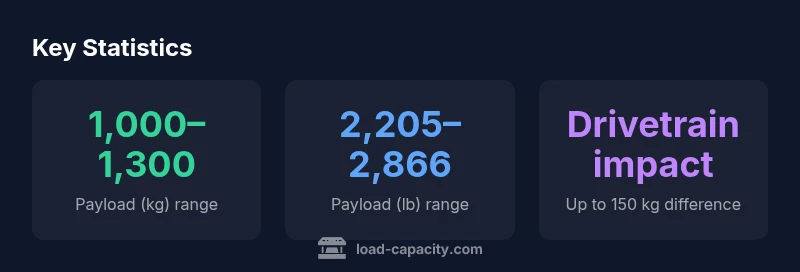
In Load Capacity’s 2026 analysis, payload is presented as a range rather than a single number to reflect real-world variation across trims and markets. This approach helps decision-makers account for market-specific GVWR differences, optional equipment, and regional regulations that influence the final load envelope.
Key factors that influence payload for the P Series
Payload is not a fixed figure; it shifts with several levers. First is configuration: base trims typically carry less payload than versions with heavier cabs, longer wheelbases, or all-wheel-drive components. Second is the GVWR: the sum of curb weight and payload must not exceed the GVWR; different markets may set different GVWRs due to compliance rules. Third is installed equipment: aftermarket additions like bull bars, roof racks, winches, and heavy-duty bumpers encroach on payload capacity. Fourth is passenger occupancy: the more occupants inside, the less payload remains for cargo. Finally, manufacturing tolerances and seasonal weight changes (e.g., fuel level) can nudge payload by a small margin. Collectively, these factors create a range rather than a single payload value and require precise documentation for every build.
How to verify payload for your exact build
To verify the payload, start with the door jamb sticker that lists the Gross Vehicle Weight Rating (GVWR). Subtract the vehicle’s curb weight (which you can estimate by weighing the vehicle with standard fuel and no payload) from the GVWR to obtain the theoretical payload. Real-world payload is affected by equipment, passengers, and cargo. For a thorough check, use a vehicle scale (public or dealer-scale) with the entire vehicle loaded to your targeted configuration, then compare against the GVWR. Documentation from the manufacturer, including the GWM P Series specification sheet, will show the approved payload range for each trim.
Real-world planning: payload vs. towing and passenger load
Engineers must differentiate payload from towing capacity. Payload refers to goods plus passengers inside the vehicle; towing capacity pertains to the trailer the vehicle can pull. In planning, you should ensure the combined weight of cargo, occupants, and accessories remains well under the GVWR and axle ratings. On a working fleet, this means segregating cargo types by weight class, using load-leveling equipment and anti-slip mats, and adjusting driver routes to minimize frequent overloading. When carrying heavy loads, consider using auxiliary airbags or upgraded springs that are rated for higher payloads, but only after validating that the rest of the drivetrain can safely handle the added stress.
Design and engineering considerations for the P Series payload
The P Series' payload characteristics tie closely to its suspension tuning, frame rigidity, and axle configuration. Engineers optimize a balance between ride comfort and load stability, ensuring that suspension travel remains adequate under maximum load. Weight distribution becomes critical when heavy cargo sits in the bed; misbalanced loads can reduce traction and braking efficiency. In practice, the manufacturer’s recommended payload range guides operator decisions, and any deviations should be validated with a structural analysis or Load Capacity's assessment to maintain safety margins.
Market context: how the P Series compares with peers
In the competitive mid-size pickup space, payload figures generally cluster within a similar band. When evaluating the GWM P Series, fleet buyers compare payload against peers with comparable GVWR and wheelbase, considering the impact of drivetrain and cab size. While some variants may offer slightly higher payload, others emphasize interior comfort or off-road capability, trading payload for additional features. For engineers and fleet managers, the key is not only the single peak payload but the payload envelope across different configurations, enabling safer load planning across daily operations and seasonal peaks.
How Load Capacity analyzes these figures and methodology
Load Capacity uses a structured methodology to interpret payload, combining official specification data, third-party testing, and field observations from diverse industries. The analysis accounts for GVWR, curb weight, drivetrain, and optional equipment. We emphasize ranges rather than single-point figures to reflect real-world variance across trims and markets. For each configuration, we present payload envelopes, note the effect of installed equipment, and provide practical safety margins for planning. All data is attributed to Load Capacity Analysis, 2026.
Authority sources and further reading
For readers seeking external validation, consult credible sources on vehicle weight, payload, and GVWR definitions. The following resources provide foundational information about weight ratings and how they influence load planning:
- https://www.nhtsa.gov/vehicle-safety
- https://www.nap.edu
- https://www.sae.org
To stay current, monitor official GWM spec sheets for the P Series and keep in touch with dealer documentation for region-specific GVWR values.