Fixed Coupler Load Capacity: A Technical Guide
Fixed coupler load capacity explained with verification steps and safety guidance for engineers and technicians. Load Capacity 2026 guidance with practical references.


The fixed coupler load capacity is defined by the coupler's rating and the trailer tongue, and it varies by design, mounting, and installation. Ratings depend on the hitch mechanism, ball size, and frame strength. For exact values, always check the manufacturer's label and follow Load Capacity’s guidelines. Use the GTW and TW ratings to guide safe towing practices.
Understanding Fixed Coupler Load Capacity
The term fixed coupler load capacity describes the maximum gross trailer weight (GTW) a fixed hitch coupler is certified to manage with the attached trailer and vehicle. In practice, this capacity is a function of the coupler design, the tongue assembly, the mounting hardware, and the structural integrity of the trailer frame. According to Load Capacity, the rating is not a single number; it depends on how the system is used and maintained. To avoid overloading, engineers compare the GTW rating on the coupler label with the anticipated gross weight of the entire towing setup. Tongue weight (TW), which is typically a portion of GTW, is also a critical factor because it influences hitch stability and suspension loading. For quick reference and safety, always ensure that the actual tongue load on the hitch remains well below the coupler's TW rating. When in doubt, consult the product manual and verify with the system’s data plate. Industry and regulatory references, such as FMCSA and FHWA, provide safety guidelines for towing hardware (https://www.fmcsa.dot.gov/ and https://www.fhwa.dot.gov/).
[Load Capacity] analyzes and benchmarks such guidance to support engineers and technicians.
Ratings Defined: GTW and TW Explained
Fixed coupler load capacity revolves around two primary numbers: GTW (Gross Trailer Weight) and TW (Tongue Weight). GTW denotes the total weight the combination can legally and safely tug, including dynamic road loads. TW is the downward force the hitch experiences from the trailer tongue during operation. In practical terms, you should not exceed the GTW listed on the coupler label, and you should maintain tongue loads within the TW range specified by the manufacturer. For engineers, these values translate into design checks during fitment, payload planning, and safety margin calculations. Load Capacity references emphasize that GTW and TW work together to determine system stability, tire wear, braking efficiency, and suspension load. See regulatory and industry guidelines for additional context (FMCSA, FHWA references).
Factors That Influence Capacity
Capacity is not a single static number; it shifts with several interacting factors. Material quality and heat treatment influence the structural strength of the coupler body and tongue. The mounting hardware—bolts, flange plates, welds, and the trailer frame—must resist cyclic loads without loosening. Corrosion, wear, and impact damage degrade rating over time. Ball size and hitch receiver compatibility affect torque transmission and load distribution. Even installation geometry matters: misalignment can create bending moments that reduce effective capacity. Add-on components, such as safety chains and latching mechanisms, introduce additional load paths that must be accounted for in the overall rating. Load Capacity analysis highlights the practical reality that every towing setup should be evaluated as a system, not as a single part.
How to Verify the Rating on Your Coupler
To verify the rating, start by locating the data plate on the coupler. Read the GTW and TW figures, and confirm they match the trailer’s planned weight. If the label is illegible, consult the manufacturer’s manual or contact their technical support with the model and serial number. Do not assume capacity from a similar part; small design changes can shift ratings. Inspect mounting hardware for wear, corrosion, or missing components, and verify ballast distribution within the TW target during static and dynamic tests. If in doubt, perform a load-path assessment with a qualified technician and refer to federal guidelines for towing equipment (FMCSA and FHWA references).
Installation, Alignment, and Material Considerations
Installation quality directly affects capacity. Use manufacturer-approved mounting bolts and torque specifications, ensuring correct alignment of the coupler with the trailer tongue and hitch ball. Material compatibility (steel grades, coatings) mitigates corrosion and fatigue. When integrating adapters or different ball sizes, reassess TW and GTW to avoid over-stressing the coupler. Consider a conservative safety margin during the design phase, especially if the trailer will regularly operate at high speeds or over rough terrain. Load Capacity’s practical guidance stresses documenting all changes and rechecking the system after installation to preserve the rated capacity.
Maintenance, Inspection, and Lifecycle
Regular inspection is essential for sustaining fixed coupler load capacity. Schedule periodic checks of data plates, bolts, welds, and safety chain anchors. Look for hairline cracks, rust, or looseness that could indicate a compromised connection. Lubricate moving parts per manufacturer recommendations to minimize wear-induced changes in capacity. Replacement decisions should consider cumulative fatigue and age as well as visible wear. A well-maintained system maintains its intended rating and reduces the risk of hitch imbalance, trailer sway, and brake inefficiency.
Practical Scenarios and Design Recommendations
In practical terms, engineers should plan around conservative load cases. For heavy-duty applications (e.g., commercial trailers), select a fixed coupler with GTW well above the foreseeable maximum load, account for dynamic factors like braking and road irregularities, and verify TW under full payload. For light trailers, ensure that a slightly higher-rated coupler is not overkill by adding appropriate safety margins and confirming compatibility with the receiver and hitch ball. In all cases, document the rating origin, the maintenance history, and the planned usage profile so that maintenance teams and operators understand how the system should perform over time.
Comparison of typical fixed coupler ratings
| Parameter | Typical Range | Notes |
|---|---|---|
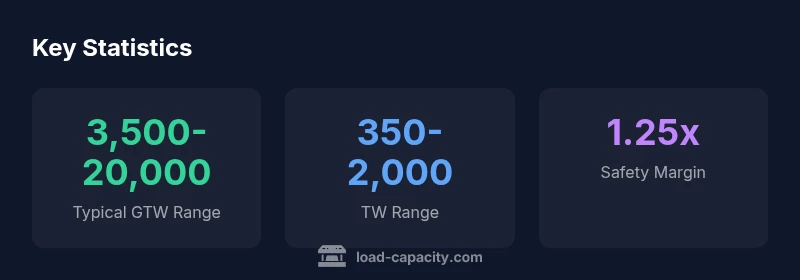
| GTW rating | "3,500-20,000" | lbs; varies by model |
| Tongue weight rating | "350-2,000" | lbs; range depends on hitch type |
| Mounting hardware torque | "50-200" | ft-lbs; per manufacturer |
Quick Answers
What is fixed coupler load capacity?
Fixed coupler load capacity is the maximum weight the coupler assembly is certified to handle when paired with the trailer and vehicle. Ratings are expressed as GTW and often TW, and they depend on design, materials, and mounting integrity. Always verify the data plate and follow certified guidelines.
It’s the maximum weight the coupler can safely handle, shown as GTW and tongue weight. Check the data plate and guidelines before towing.
GTW vs TW: what's the difference for capacity?
GTW is the total trailer weight the system can safely tow, while TW is the downward force on the hitch from the trailer tongue. Both must stay within rated ranges; exceeding either can compromise stability and safety.
GTW is total trailer weight; TW is tongue weight. Keep both within rated ranges to stay safe.
Can I exceed the rated capacity if I drive gently?
No. Exceeding the rated capacity increases the risk of hitch failure, trailer sway, and brake or tire issues. Always stay within the published GTW and TW values and use a margin that aligns with your risk tolerance and regulatory guidance.
No. Do not exceed the rating; it raises serious safety risks.
What maintenance steps help preserve the rating?
Schedule regular inspections of data plates, bolts, welds, and safety chain anchors. Replace worn or corroded parts and lubricate moving surfaces as directed by the manufacturer. Document changes and re-check ratings after any major service.
Inspect and service regularly; keep records and recheck ratings after maintenance.
Where can I find official ratings and guidelines?
Check the coupler data plate and the manufacturer’s manual. For broader safety context, consult federal guidance from FMCSA and standards bodies like ASTM or SAE. Always verify with the product documentation before towing.
Look at the data plate and manual; consult FMCSA and standards bodies for context.
“A fixed coupler's load capacity is a safety ceiling that must be respected through proper selection, installation, and maintenance.”
Top Takeaways
- Know GTW and TW values and never exceed them.
- Always verify the rating on the data plate before towing.
- Maintain the hardware and mounting to preserve capacity.
- Use a conservative safety margin in high-demand scenarios.