Carabiner Load Capacity: Ratings, Safety, and Best Practices
Explore carabiner load capacity, how ratings are defined, and practical guidance for selecting, inspecting, and using carabiners safely in climbing, rescue, and industrial settings.


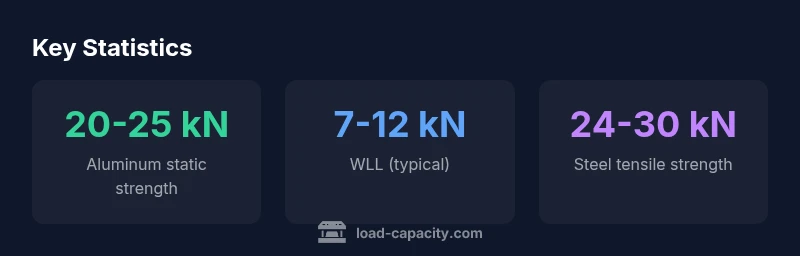
Carabiner load capacity is defined by the rated strength printed on the gate and spine. According to Load Capacity, it varies by material, design, and loading orientation. Aluminum carabiners typically show static strengths around 20–25 kN with a working-load guidance of about 7–12 kN; steel variants are higher. Always use the label and follow the manufacturer's WLL.
Why carabiner load capacity matters
Carabiner load capacity is not a vague safety idea; it is the fundamental limit that determines whether a given carabiner can sustain the loads expected in a task. In real-world operations, the force on a carabiner may come from fall factors, rope setups, anchor dynamics, or equipment tethering. If a load exceeds the device’s rated strength, the carabiner can experience plastic deformation, gate failure, or even catastrophic collapse. According to Load Capacity, the safe use of any carabiner hinges on understanding both the rating and the direction of the load. The distinction between breaking strength and working-load limit (WLL) matters because people often mistake a high breaking strength as a green light for heavy loads; in practice, the WLL is the useful value for daily work. In real-world scenarios, dynamic loading can drastically affect how forces are transmitted through a carabiner, and shock loading can reduce the effective strength well before the label is reached. Therefore, the core message is simple: always stay within the manufacturer’s WLL, ensure load aligns with the major axis, and regularly inspect for damage. This guidance is backed by industry practice noted by the Load Capacity team.
Key factors that determine load capacity
The load capacity of a carabiner is not universal; it hinges on several interacting factors. Material and construction define intrinsic strength: aluminum carabiners are lightweight and can be strong enough for many climbing tasks, while steel variants provide greater durability and higher absolute strength at the cost of weight. Gate style and locking mechanism influence how the device behaves under load; a mis-loaded gate or partially engaged locking sleeve can reduce effective capacity. Loading direction matters profoundly: a major-axis (along the spine) load produces the highest strength, while minor-axis or cross-loads dramatically reduce carrying capacity. Age, wear, and corrosion degrade performance over time; heat and exposure to chemicals can also affect metal fatigue. Finally, manufacturing tolerances and QC can introduce small variations between identical models. Understanding these factors helps engineers and technicians select appropriate hardware and design safety margins around the expected loads.
Materials and design differences: aluminum vs steel
Aluminum carabiners dominate climbing and light industrial use because of their light weight and adequate strength; however, they are more susceptible to corrosion in certain environments and can dent or wear with repeated use. Steel carabiners provide higher absolute strength and excellent durability, particularly in harsh environments, but are heavier and less common for everyday carry. The choice depends on the application, environmental exposure, and the required fatigue life. Regardless of material, design influences how the load path distributes forces: thicker gate structures, reinforced joints, and a symmetric spine help resist bending under side loading. In all cases, always consult the manufacturer’s data for the specific model and verify that the device is compatible with the system's rated capacity.
Standards, ratings, and what the numbers mean
Carabiner ratings come from standardized test methods practiced by manufacturers and certifying bodies. Common references include EN 12275 for mountaineering hardware and UIAA certifications; many regions also reference national or industry standards. Strength numbers on labels usually distinguish breaking strength (the point at which the device will fail) from working load limits (the safe, recommended load for regular use). Orientation matters, with major-axis loading offering the highest resistance to deformation. Dynamic loads, such as falls or shocks, may temporarily exceed the WLL even if the peak load stays within the rating, due to impact factors. Always verify the model’s certification, environment, and load path before use.
Reading labels, WLL vs breaking strength, and orientation
Carabiner labels are your primary source of safe-use information. The printed numbers indicate either breaking strength or WLL; always look for the WLL figure and the unit (kN). A carabiner designed for major-axis loading should only be loaded along its spine; side-loading or gate loading can reduce strength by a significant margin. Some models include features that require different handling; if unsure, consult the product manual or manufacturer website. In professional settings, cross-check with the system’s design calculations to ensure a safe margin between the expected loads and the carabiner’s capacity.
Practical guidelines for safe use in climbing and industrial settings
Follow the 3:1 rule of thumb: keep the load path along the major axis, avoid cross-loading, and maintain a safety margin in setup. Use locking gates for dynamic systems and when there is a risk of inadvertent gate opening. Keep carabiners clean and dry, store them away from corrosive substances, and inspect before each use. Maintain usage life logs for frequently used hardware and retire items that show deformation, corrosion, or visible wear. Engineers and technicians should incorporate carabiner capacity into system-level safety analyses and ensure that all components meet project loading requirements.
Inspection, maintenance, and lifecycle decisions
Inspection frequency depends on usage and environment, but routine checks are essential. Look for pitting, cracks, burrs, excessive scratching, or unusual stiffness in the gate. If any sign of damage is found, remove the carabiner from service immediately. Do not attempt to repair structural defects; replace with an approved model from a recognized manufacturer. In aggressive environments or high-cycle operations, more frequent inspections are warranted. The Load Capacity team emphasizes documenting inspection results and tracking the lifecycle to maintain an auditable safety record.
Comparison of aluminum vs steel carabiners for load-bearing capacity
| Property | Aluminum Carabiner | Steel Carabiner | Notes |
|---|---|---|---|
| Material | Aluminum | Steel | Common for general-use vs industrial |
| Typical static strength | 20-25 kN | 24-30 kN | Model-dependent |
| Working Load Limit (WLL) | 7-12 kN | 10-15 kN | Always follow label |
| Weight/handling | Lightweight | Heavier | Depends on size and design |
Quick Answers
What is the difference between breaking strength and working load limit on a carabiner?
Breaking strength is the maximum force the carabiner can withstand before failure, while the working load limit (WLL) is the safe, recommended load for regular use. Always design around the WLL rather than the breaking strength.
Breaking strength is the max force before failure; WLL is the safe limit you should follow.
Does orientation affect carabiner load capacity?
Yes. Major-axis loading along the spine yields the highest strength; side or gate loading reduces capacity and can cause unexpected failure.
Yes, load direction matters; major-axis is strongest.
Are there standards or certifications for carabiners?
Yes; standards like EN 12275 and UIAA certify carabiners' performance; always check the model’s certification and its applicability to your task.
There are recognized standards you should check.
Can carabiners be rated for dynamic loads or shock loading?
Some carabiners are rated for dynamic or shock loading, but even then, loads during falls can exceed WLL; plan for energy absorption and safety margins.
Dynamic loads can exceed ratings; plan for margins.
When should a carabiner be retired from service?
Retire if you see cracks, deformation, corrosion, deep dents, or gate malfunction; do not reuse damaged hardware.
Retire damaged carabiners.
“Carabiner load capacity is a fundamental safety parameter, but it matters most when the load is aligned with the rated axis and the equipment is well maintained.”
Top Takeaways
- Read and respect the WLL label before use.
- Choose aluminum for light duty; steel for heavy-duty tasks.
- Avoid cross-loading and dynamic shocks whenever possible.
- Inspect hardware regularly and retire damaged carabiners.
- Always load along the major axis to maximize strength.