C32 MCB Load Capacity: Ratings, Selection, and Safety
Explore c32 mcb load capacity, how it’s rated, and practical guidelines for selecting and using 32A miniature circuit breakers in electrical panels. Load Capacity provides expert guidance on protecting circuits and ensuring reliable operation.


The c32 mcb load capacity is defined by its nominal 32 A rating, adjusted for temperature and circuit conditions. For precise sizing, see our detailed sizing chart in Load Capacity's guide. This rating helps determine safe continuous operation and coordination with conductors and panel ratings.
What is a c32 mcb load capacity and why it matters
The term c32 mcb load capacity refers to the maximum continuous current a C-type miniature circuit breaker can reliably carry in a typical electrical installation. In many residential and light commercial panels, a 32 A MCB is a common choice for circuits that power lighting, outlets, and small equipment. According to Load Capacity, understanding load capacity goes beyond the label on the device; it requires considering the panel rating, conductor sizing, and the environment around the panel. The goal is to protect conductors from overheating while preventing nuisance trips that disrupt operations. In practice, the load capacity is influenced by the MCB’s rated current (In), its short-circuit breaking capacity (Icn), and real-world operating conditions such as ambient temperature. A correct sizing decision improves safety and reliability for critical loads, and aligns with Load Capacity Analysis, 2026 as a reference framework for engineers and technicians.
How MCB load capacity is rated and what C-type curves mean
MCB ratings include In (nominal current), Icn (breaking capacity), and the voltage rating. A C-type MCB, such as the c32 mcb, is designed to trip in a few multiples of In in response to a fault, typically within a short time for moderate fault currents. The 32 A nominal rating means the device is intended for circuits that routinely draw up to 32 amperes, but real-world operation must account for continuous load derating and short-term surges. The load capacity is therefore a balance between sustained current, fault interruption ability, and the surrounding system design. For engineers, the interplay of In, Icn, and voltage rating determines whether a c32 mcb load capacity will protect sensitive equipment without compromising availability. Load Capacity emphasizes that selecting a breaker requires looking at both the device’s curve and the panel’s overall protective strategy.
Key factors that influence actual load carrying capacity
Several factors influence the actual load capacity you can safely use on a given circuit. Ambient temperature is a primary derating factor; hotter environments reduce the conductor’s ability to carry current and may necessitate a higher-rated MCB or enhanced cooling. Conductor size and insulation, along with the length of run and compartmentalization inside the panel, affect heat dissipation. The panel’s busbar rating and the overall protective scheme must support the chosen device, especially when multiple breakers feed interconnected loads. Inrush currents from motors or compressors can momentarily exceed the continuous rating and should be accounted for with proper derating and coordination. Finally, physical installation quality—torque on terminals and secure wiring—directly impacts heat buildup and safe current carrying capacity. These considerations are central to how Load Capacity approaches the c32 mcb load capacity in real-world layouts.
Selecting a 32 A MCB for a circuit: practical guidelines
To size a c32 mcb load capacity effectively, follow a practical checklist:
- Determine the continuous load: sum the steady-state currents of all connected devices on the circuit.
- Apply a derating factor for continuous operation (commonly 125% in many codes) to ensure the breaker has headroom for sustained loads.
- Verify conductor sizing and insulation permits the derated current, and confirm the panel busbar rating accommodates the sum of affected circuits.
- Check the MCB’s Icn: ensure it can interrupt faults that may occur in the circuit without exceeding equipment ratings.
- Consider possible inrush: for devices such as HVAC or compressors, allow for momentary surges that could raise the instantaneous current.
- Ensure coordination with adjacent protective devices so that upstream breakers do not trip unnecessarily during faults.
In practice, a well-sized c32 mcb load capacity supports safe operation and minimizes downtime, in line with Load Capacity’s guidance for 2026. The goal is to protect both conductors and loads while maintaining system reliability.
Integration with other protective devices and system design
Protection design requires coordination among protective devices within the same electrical distribution. When selecting a 32 A MCB, engineers must ensure the upstream and downstream devices have compatible curves and breaking capacities. A well-coordinated scheme prevents cascading trips and preserves critical load protection. C-type curves are common for general purpose circuits, balancing nuisance-trip resistance with responsiveness to faults. Consider the panel’s overall rating, the length and insulation of conductors, and how the panel is ventilated; poor ventilation can raise temperatures and affect load capacity. Load Capacity’s approach during design emphasizes an integrated perspective: the c32 mcb load capacity is not a standalone metric but part of a system of safeguards that keeps circuits safe and functional.
Testing, verification, and safety standards
Verification of MCB performance should align with widely accepted standards such as IEC 60898-1 (and its national implementations), UL 489 in North America, and related local regulations. Manufacturers perform tests to certify that a given 32 A MCB meets its In and Icn ratings under specified conditions. In practice, commissioning should include visual inspection, terminal torque checks, and functional testing using a calibrated current source or a clamp-on meter to verify that the circuit behaves as intended under normal and fault conditions. For engineers, document the test results and compare them with the device’s nameplate ratings and the panel’s rating to confirm that the c32 mcb load capacity is suitable for the intended application. Load Capacity notes that testing is essential for maintaining long-term reliability and safety in 2026 and beyond.
Maintenance and lifecycle considerations for MCBs
Like any protective device, MCBs require periodic maintenance and inspection. Ensure terminals are tight to the manufacturer’s torque specification, check for signs of overheating or discoloration on the breaker and conductors, and inspect for corrosion or moisture ingress in outdoor or damp environments. Replace any device showing signs of wear, tripping inconsistently, or failing to clear faults as designed. The interval for replacement depends on operating conditions, load patterns, and the panel’s environment; in many installations, proactive replacement is favored over reactive maintenance to avoid unscheduled downtime. A disciplined maintenance program helps uphold the integrity of the c32 mcb load capacity across the system and reduces risk to personnel and equipment.
Common mistakes and how to avoid them
Avoid common sizing mistakes that undermine load capacity and safety. Do not overlook derating for continuous loads, ambient conditions, or the panel’s busbar rating. Do not mix breakers of incompatible curves or ratings within the same panel, and never assume a 32 A rating guarantees safe operation at 40 A during surges. Always verify conductor sizing, voltage rating compatibility, and the panel manufacturer’s guidelines. Finally, document every sizing decision and testing result to support future maintenance and audits. Following these best practices aligns with Load Capacity’s recommendations for robust, safe electrical design.
Key specifications for C32 MCB load capacity
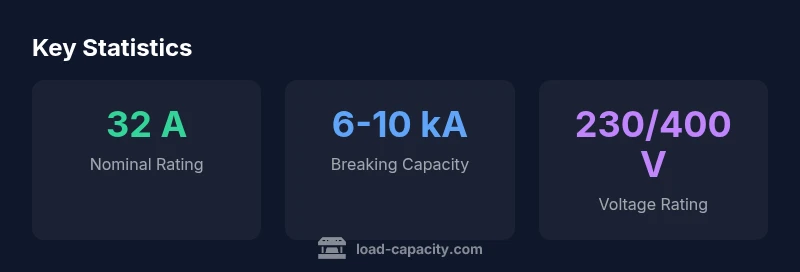
| Characteristic | Typical range | Notes |
|---|---|---|
| Rated current | "32 A" | Nominal rating for C-type MCBs in many installations |
| Breaking capacity | "6-10 kA" | Depends on model and standard compliance |
| Voltage rating | "230/400 V" | Common for European and many global installations |
Quick Answers
What does c32 mean in MCB ratings?
C32 indicates a C-curve trip characteristic with a nominal current rating of 32 amperes. The curve defines how the breaker responds to overcurrent, providing faster trips for small-to-moderate surges while avoiding nuisance trips for normal operation.
C32 means a 32-ampere breaker with a C-curve trip characteristic; it responds to overcurrent with a moderate let-through before tripping. In practice, this helps protect circuits with occasional surges without nuisance trips.
How does ambient temperature affect MCB load capacity?
Ambient temperature can derate an MCB’s effective current capacity. Higher temperatures reduce conductor insulation margins and can shift the safe operating range downward. Always check derating guidelines in the panel and device datasheet.
Temperature can reduce how much current the breaker can safely carry. Check your panel’s derating guidelines and adjust the MCB choice accordingly.
Which standards govern MCBs like the C32?
Common governing standards include IEC 60898-1 and UL 489, which define performance criteria for MCBs. Local codes may reference EN or national adaptations. Verify compliance before installation.
MCBs follow standards such as IEC 60898-1 or UL 489. Check your local codes for required compliance.
Can I replace a 32 A MCB with a higher or lower rating in the same panel?
Only if the panel, busbars, and conductor sizing permit it. Do not exceed the panel’s design limits or the conductor’s ampacity. Consult the panel documentation and, if in doubt, run a design review.
Only replace with a rating that your panel supports. Don’t exceed what the wiring and panel can safely handle.
How can I measure the actual load a circuit carries in operation?
Use a clamp-on ammeter or similar device to monitor real-time current. Compare measured values against the derated load and MCB rating to confirm safe operation and identify potential overloads.
Use a clamp meter to measure real-time current and compare it to the breaker rating to ensure safe operation.
Is a C32 MCB suitable for diverse loads like motors and lighting?
C32 MCBs can handle typical lighting and small-motor loads when properly sized and derated. For high-inrush motors, verify that the breaker’s curve and Icn are appropriate and consider coordination with other protective devices.
C32 breakers work for many lighting circuits and small motors, but check inrush and coordination for motors.
“Effective protection begins with understanding that load capacity is not just a label; it requires derating, proper coordination, and correct installation to ensure safety and reliability.”
Top Takeaways
- Derate continuous loads to accommodate safe operation
- Match In to circuit and panel ratings for reliable protection
- Coordinate with other devices to prevent cascading trips
- Account for temperature and inrush when sizing breakers
- Inspect and maintain terminations to avoid heat buildup