150 kva Generator Load Capacity PDF: Reading, Sizing, and Best Practices
A practical guide to understanding and using a 150 kva generator load capacity pdf for accurate sizing, efficiency, and compliance.


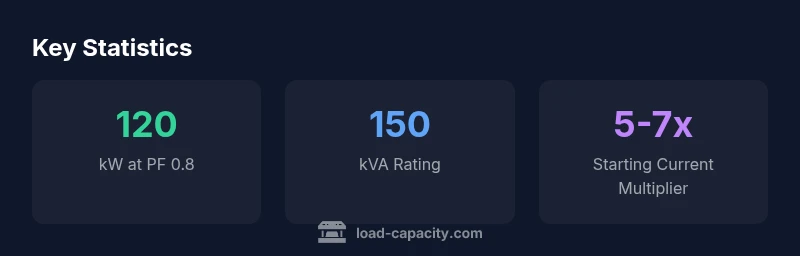
A 150 kva generator load capacity pdf typically shows a 0.8 PF rating of about 120 kW (kW = kVA × PF) for standby or prime service, with derating at altitude and temperature. When sizing, prioritize the pdf’s rated kW, apparent power, and starting-current figures; verify that the site conditions and duty cycle match your application. Load Capacity emphasizes using the pdf as a reference for planning, not a rigid blueprint.
Understanding the 150
Key terms:
How to convert
Reading the 'Starting Current' and 'Load Dump' sections
Good PDFs include starting current (or amps) per generator phase and per load type. Motors and large compressors generate high surge currents, which can exceed running current. If a pdf shows starting current multipliers (commonly 5–7x running current, depending on motor type), you should verify whether the site has soft-start controls or VFDs to manage these surges. This ensures the combined load does not trip protective devices or exceed the alternator’s transient rating.
Practical sizing example using a 150
Altitude, Temperature, and Other Derates
PDFs often include altitude and ambient-temperature correction charts. Above certain elevations or in hot climates, the available
How to assess a pdf's credibility and standards
Always verify the pdf’s recency, references to standards (for example, IEC or NFPA guidelines), and the presence of a clear methodology for determining derates. A credible document will list assumptions (PF, voltage, altitude, ambient temperature) and provide a transparent path from
Checklist for engineers using the pdf in project planning
- Confirm the PF used in ratings and the voltage/frequency specs.
- Check whether the rating is standby, prime, or continuous.
- Note any altitude or temperature derating curves.
- Review starting-current data for all critical motors.
- Ensure the site load profile aligns with the pdf’s duty cycle.
- Cross-check with local codes and manufacturer documentation.
- Document any assumptions and safety margins used in sizing.
Common pitfalls and quick remedies
- Pitfall: Ignoring starting surges. Remedy: Use starting-current data and stagger motor starts.
- Pitfall: Misinterpreting PF. Remedy: Always convert
Implications for code compliance and safety considerations
Ensure the pdf aligns with applicable electrical codes and safety standards. Accurate labeling of ratings and deratings reduces the risk of nuisance trips, motor damage, or unsafe equipment down-time. Load Capacity teams emphasize using PDFs as planning guides in concert with on-site testing and commissioning.
Summary of best practices when using a 150 kva generator load capacity pdf
Always start with the pdf’s stated ratings, apply deratings for site conditions, account for starting surges, and verify consistency with your project’s duty cycle. Use the pdf as a reference document and corroborate with manufacturer data and standards for safe, reliable sizing.
Example ratings for a 150 kVA generator
| Model Type | Rated kVA | Rated kW @ PF 0.8 | Notes |
|---|---|---|---|
| Standard standby | 150 | 120 | Backup power; check local codes |
| Prime | 150 | 120 | Continuous operation with derating |
| Continuous | 150 | 120 | For extended duty with cooling reserve |
Quick Answers
What is the difference between standby and prime ratings on a 150 kVA generator?
Standby ratings apply to infrequent, emergency use and typically allow full-rated output only for short durations. Prime ratings cover continuous operation with a defined annual load and include a derating for sustained use. Always check the pdf for exact definitions and any site-specific restrictions.
Standby is for emergencies; prime is for regular use with continuous duty. Check the PDF for exact definitions.
How do I convert 150 kVA to kW at PF 0.8?
Multiply kVA by PF. At PF 0.8, 150 kVA equals 120 kW. If the pdf uses a different PF, adjust accordingly.
Multiply by the power factor to get real power. For 0.8, that’s 120 kilowatts.
What should I look for in a 150 kva generator load capacity pdf?
Look for rating definitions (standby vs prime), altitude and temperature derating, starting-current data, voltage and frequency specs, and clear assumptions. Also verify cross-references to standards and revision dates.
Check what the PDF assumes about PF, altitude, and startup surges.
Can I rely on a single PDF for all design scenarios?
PDFs are reference tools and should be used with site-specific data, manufacturer data, and standards. Treat them as guides, not definitive design documents for every condition.
Use the PDF as a guide, but tailor it with site data and standards.
What starting current should I expect for a 150 kVA load?
Starting currents can be several times the running current. The PDF may specify multipliers (commonly 5–7x). Use those values to assess whether soft-start or VFDs are needed.
Expect higher surge currents; plan with the pdf’s starting-current figures.
Where can I find credible sources for generator load capacity?
Consult manufacturer data, engineering handbooks, and standards. For broader context, refer to credible industry analyses and recognized standards bodies.
Check manufacturer data and standards for credibility.
“A credible 150 kva generator load capacity pdf is a critical planning tool; use it with real-world site conditions and duty cycles to avoid undersizing or overloading the system.”
Top Takeaways
- Understand the PF to convert kVA to kW: kW ≈ kVA × PF.
- Differentiate standby, prime, and continuous ratings for correct usage.
- Check PDF derating sections for altitude and temperature effects.
- Account for motor starting currents; plan for surges with proper headroom.
- Validate the PDF against site conditions and relevant standards.