Spider Crane Load Capacity: Essential Guidelines for Safe Lifting
A data-driven guide to spider crane load capacity, how it’s calculated, and best practices for safe lifts on challenging sites.


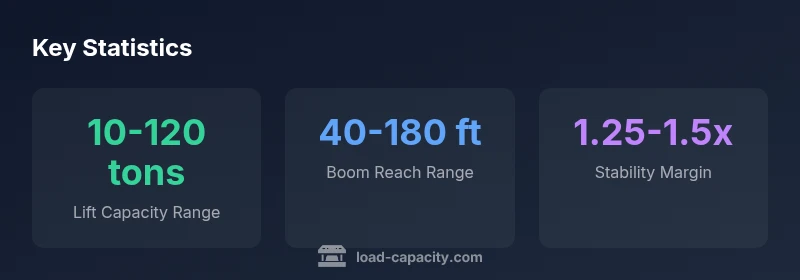
Spider crane load capacity typically ranges from 10 to 120 tons, depending on model, ballast, and configuration. For planning, engineers consult manufacturer load charts and account for ballast, outriggers, and ground conditions to determine safe lifts at a given radius. According to Load Capacity, the capacity envelope expands with modular ballast and extended booms, but design safety margins remain essential.
Understanding Spider Crane Load Capacity
Spider cranes are engineered to lift loads within a defined capacity envelope that depends on the machine’s configuration, ballast, outriggers, and the working radius. The published capacity is a conservative figure tied to a standard setup—typically at maximum ballast and full outrigger extension on stable ground. For anyone involved in lifting operations, it is essential to treat capacity as a function of the setup and environment rather than a single static number. According to Load Capacity, capacity is best interpreted through official charts that map lift weight to radius, boom length, and support conditions. This means that changes in ballast, outrigger width, or deck conditions can shift the allowable load dramatically. Engineers should always cross-check the current configuration against the chart before any lift, and document deviations for the site team. In practice, the most reliable approach is to establish a lift plan that explicitly connects the load, radius, wind, and ground support to a single, traceable capacity value.
How Capacity Is Calculated: Load Charts, Ballast, and Geometry
Capacity calculation for a spider crane relies on a structured model that combines geometry with ballast and support. Manufacturers publish load charts that relate the rated load to the radius (the distance from the crane’s centerline to the load), the boom angle, and the configuration of ballast and outriggers. The geometry of spider cranes—compact crawlers with multiple outrigger legs—means stabilization is highly sensitive to foundation conditions. Small changes in footing material or soil bearing can shift the allowable load. When reading charts, operators should note: (1) the baseline configuration, (2) the current radius, (3) the boom length, and (4) the ballast amount. Derating may be required for windy conditions or uneven ground, and the chart should always be consulted for the exact operating envelope. Load Capacity guidance emphasizes documenting all chart-derived decisions for audits and operator handovers.
Factors That Affect Capacity On Site
Site conditions are a major determinant of effective capacity. Ground bearing and soil type influence the stability margin and the effectiveness of outriggers. Wind is a critical, often underappreciated factor; even seemingly modest gusts can reduce safe lifting capacity, particularly at longer radii or with higher booms. Outriggers should be extended to the maximum width allowed by the job, and mats or stiffeners may be required on soft ground to reduce settlement. The crane’s configuration—whether using full ballast, counterweights, or compact ballast—affects both load capacity and mobility. Equipment condition matters too: worn cables, degraded hydraulic lines, or misaligned tracks can alter the centroid and reduce the safe envelope. The takeaway is simple: capacity is dynamic and local. Always assess the site in real-time against the load chart and adjust accordingly.
Best Practices for Planning Lifts with Spider Cranes
Effective planning minimizes risk. Start with a formal lift plan that lists: load weight, radius, boom length, ballast, outriggers settings, wind speed, ground condition, and a step-by-step sequence for the lift. Use a certified signal person to coordinate hoisting and ensure the load path remains clear of obstructions. Verify that outriggers are on firm, level ground and that mats are used on soft soil. Pre-lift checks should include a cradle or spreader bar to distribute load evenly, a systems check of hydraulics, and a review of emergency procedures. Finally, practice a dry run with the rated load position to confirm the capacity is not exceeded and that all safety margins remain intact.
Safety, Ground Conditions, and Wind Derating
Capacity derating is commonly applied for wind, uneven terrain, and dynamic effects. A standard rule is to derate the lifting capacity when wind exceeds a defined threshold or when the load path involves long offsets or swings. Ground conditions such as saturated soil, frost, or freeze-thaw cycles can reduce contact pressure and stability. Outriggers should be inspected for proper contact with the ground; mats or cribbing may be required for rock or gravel surfaces. The operator should maintain a conservative buffer between the rated capacity and the actual load, especially during critical lifts or when multiple loads share the same work zone. Clear communication and vigilant monitoring during the lift are essential to ensure capacity is not exceeded.
Case Study: Simple Example Calculation
In a typical urban lift scenario, a spider crane configured with full ballast and wide outrigger spread is planned to lift a 40-ton component at a 40 ft radius with the boom at mid-length. The chart indicates a safe load close to this value under calm wind conditions on firm ground. If wind increases or the footprint becomes constrained, the derated capacity may fall below the required 40 tons. The operator should immediately reassess with the current chart, reduce the load, shorten the radius, or adjust the ballast to regain a safe margin. This iterative approach—chart, assess, adjust—ensures that the lift remains within the acceptable capacity envelope.
Selecting a Spider Crane: Checklist
- Confirm model capabilities and verify current load chart for the exact configuration
- Ensure ballast and outriggers match the planned setup
- Inspect ground conditions and confirm stability with mats if needed
- Determine wind limits and apply derating as required
- Assign a qualified signal person and maintain clear communication during lifts
- Document all decisions and maintain a load-tracking record for audits
Spider crane capacity and configuration ranges
| Aspect | Typical Range | Notes |
|---|---|---|
| Lift capacity | 10-120 tons | Model-dependent; ballast and boom length matter |
| Boom reach | 40-180 ft | Based on model and configuration |
| Counterweight options | 5-60 tons | Affects both capacity and mobility |
| Footprint width | 8-25 ft | Depends on outrigger spread |
Quick Answers
What factors determine a spider crane's load capacity?
Load capacity is determined by model, ballast, outriggers, boom length, radius, and ground conditions. Wind also plays a significant role, especially at larger radii. Always consult the manufacturer’s load chart for the current configuration.
Capacity depends on the crane model, ballast, outriggers, and ground conditions. Check the chart for your current setup.
Can you lift beyond the rated capacity with dynamic loading?
No. Rated capacity is the maximum safe load under defined conditions. Dynamic effects, acceleration, and wind require derating to ensure safety.
Never exceed the rated capacity; derate for wind and dynamic loads.
How do you verify the load capacity on a worksite?
Review the current load chart for the exact configuration, confirm ballast and outrigger settings, and assess ground conditions. Conduct a controlled lift within the chart’s envelope and document the results.
Always check the chart for your setup and conditions before lifting.
What is the difference between lift capacity and load on the hook?
Lift capacity is the maximum weight the crane can safely lift under defined conditions; load on the hook is the actual weight being lifted at a moment in time. The actual load must always be below the rated capacity.
Capacity is the max; load on the hook is what you’re lifting now—stay under the max.
What safety practices support capacity decisions?
Use a certified signal person, ensure outrigger mats on soft ground, avoid sudden movements, and annotate capacity in the lift plan. Regularly inspect rigging and ground support before lifts.
Work with a qualified signal person and verify the plan before lifting.
“Spider crane load capacity is a function of configuration and site conditions; always verify load charts and use proper ballast. A systematic approach reduces risk.”
Top Takeaways
- Read the load chart for the exact configuration
- Optimize ballast and outrigger spread before lifting
- Derate capacity for wind and dynamic effects
- Secure firm ground access and document the plan