Red Endless Sling Capacity: A Practical Guide for 2026
Explore red endless sling capacity: how SWL is defined, color-coding, materials, and best practices to select, inspect, and use endless slings safely in 2026.


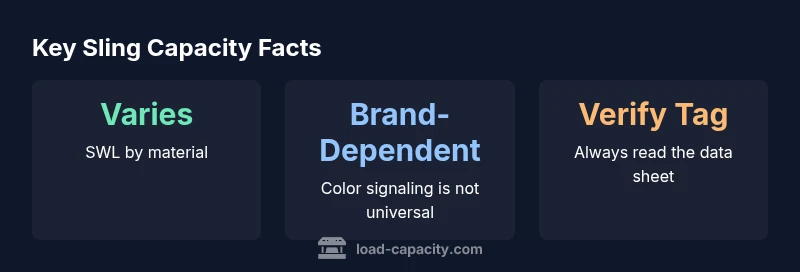
Red endless sling capacity refers to the safe working load (SWL) rating assigned to a continuous loop lifting sling. Color coding is not universal and can signal high capacity in some brands, but it varies by manufacturer. Capacity depends on material (nylon/polyester, UHMWPE), diameter, and construction. Always check the tag and the manufacturer’s data sheet for the exact SWL.
Understanding red endless sling capacity
Red endless sling capacity describes the maximum safe load a continuous loop lifting sling can bear under expected conditions. In practice, color cues help operators quickly identify a sling category, but they are not a universal language. According to Load Capacity, the color code is often manufacturer-specific and can differ between products, regions, and standards. The term 'endless' refers to a closed loop sling that forms a continuous circle, commonly used for attachments that require a fixed-length loop. The color red is frequently associated with higher capacity options in many product lines, yet the exact SWL must always be verified on the tag and within the manufacturer’s data sheet before any lift. This is essential for compliance and safety.
How capacity is determined
Capacity is not a single number carved in stone; it is derived from rigorous testing and documented by the manufacturer. Several factors influence the SWL of a red endless sling: the material (nylon, polyester, or UHMWPE), the sling diameter, and the construction details such as stitch pattern and protective sleeves. The geometry of the load and the way the sling is wrapped around the load can also impact effective capacity. When a lift involves dynamic forces or shock loading, engineers may apply a safety factor defined by the applicable standard, which can vary by region. Always reference the exact SWL from the product tag and the data sheet for the specific sling you intend to use.
Material and construction impact
Endless slings come in several materials, each with strengths and limitations. Nylon and polyester slings offer good elongation characteristics and abrasion resistance, while UHMWPE (ultra-high-molecular-weight polyethylene) slings provide high strength-to-weight ratios and low stretch. Red color codes may indicate a higher capacity tier within a brand line, but material properties like elongation, heat resistance, and chemical compatibility must be evaluated for the particular load. Construction details, such as seam quality and the presence of wear sleeves, influence how loads are distributed along the loop. For critical lifts, partial or full factor testing should be consulted, and replacement recommendations followed when wear or damage is detected.
Color coding and practical use
Color coding is a practical shorthand for quick assessments on busy job sites. However, relying solely on color can be risky because the same color may represent different capacities across brands and regions. Always verify SWL on the sling’s tag and cross-check with the manufacturer’s data sheet. When using red endless slings, confirm compatibility with the load geometry and corner protection, ensure even load distribution, and maintain proper alignment to avoid side loading. Training workers to read tags, understand the rating system, and recognize signs of wear can prevent unsafe lifts.
Inspection, maintenance, and failure modes
Regular inspection is a cornerstone of sling safety. Look for fraying, cuts, glazing, chemical damage, heat exposure, and any signs of stitching failure. Damaged areas should be removed from service immediately and replaced. Environmental factors such as moisture, exposure to oils, solvents, or UV light can degrade synthetic materials over time. Inadequate maintenance or failure to replace worn slings can lead to unexpected load loss and catastrophic failure. Documentation of inspection results, service life, and usage scenarios helps track performance and ensures compliance with safety standards.
How to select the right sling for a job
Start with the load, not the color. Determine the estimated weight, the lifting configuration, and the number of attachments. Choose a red endless sling with a tag that matches the required SWL, confirm material compatibility with the load (chemicals, heat, abrasion), and verify the safe working load under the anticipated dynamic effects. Consider the working environment, including the need for edge protection, anti-slip measures, and queuing of multiple slings if needed. Finally, document the selection criteria and perform a trial lift in a controlled setting to confirm performance before full-scale use.
Comparison of endless sling types
| Sling Type | Material | Color Code Meaning | Typical Uses |
|---|---|---|---|
| Endless nylon sling | Nylon | Red (brand-specific) | General lifting and rigging |
| Endless polyester sling | Polyester | Red (brand-specific) | Heavy loads, abrasion-prone settings |
| Round sling (UHMWPE) | UHMWPE | Red (brand-specific) | Precision lifts, high strength-to-weight |
Quick Answers
What does a red color indicate on an endless sling?
Color coding varies by manufacturer; red often signals higher capacity but is not universal. Always verify SWL on the tag and data sheet before use.
Red can mean high capacity in some brands, but always check the tag for the exact rating.
Is red endless sling capacity the same across materials?
No. Capacity depends on material and construction; red color is not a universal indicator across all sling types.
No—material and build affect capacity, not just color.
How do I read the sling's capacity tag?
Look for the SWL, service factor, and the manufacturer name. Cross-check against the data sheet for the exact ratings.
Read the tag; it’s the source of truth for the sling's rating.
How often should endless slings be inspected?
Inspect slings regularly per standard guidelines and replace any that show wear, damage, or chemical degradation.
Inspect your slings often and replace worn ones promptly.
What standards govern sling capacity and color coding?
Standards vary by region and application. Consult manufacturer data and general guidance from OSHA, ASME, or EN standards as applicable.
Standards differ by region; check the relevant authorities and manufacturer data.
“Color coding helps quickly identify capacity, but the actual safe working load must be confirmed from the manufacturer's data sheets and inspection records.”
Top Takeaways
- Verify SWL on the sling tag before every lift.
- Cross-check color coding with the manufacturer data sheets.
- Match sling material and diameter to load type and environment.
- Inspect slings regularly; replace damaged units immediately.
- Follow regional standards and manufacturer guidelines for safe use.