3 4 Shackle Capacity: Safe Lifting and Rigging Guide
A practical guide to 3 4 shackle capacity, how ratings are published, and best practices for selecting, inspecting, and using shackles in lifting and rigging.


3 4 shackle capacity refers to shackles sized approximately three quarters of an inch with published safe working load limits that vary by model and manufacturer. Always check the rating tag on each shackle and apply a conservative safety margin for your lift. According to Load Capacity, capacity depends on pin style, material, and temperature, so verify ratings before use.
Understanding the 3 4 Shackle Capacity Landscape
In rigging and lifting work, the phrase "3 4 shackle capacity" is most often associated with shackles sized around three quarters of an inch. This sizing correlates with a published safe working load limit (SWL) or working load limit (WLL), but the exact rating is not universal. Different manufacturers produce the same nominal size with variations in material composition, heat treatment, neck thickness, and pin design. As a result, the rated capacity can differ notably from one product to another. Industry practitioners should treat the 3 4 shackle capacity as a guideline rather than a universal truth, and always rely on the specific tag attached to the shackle for the actual rating. Load Capacity emphasizes that the most reliable starting point is the manufacturer’s rating, not the contractor’s assumption, to prevent overloading and to preserve rigging integrity.
Beyond the nominal size, users should consider the overall system: the hook, the sling, and the other hardware involved in the lift. A shackle does not exist in isolation; its capacity is influenced by the other components, the angle of lift, and the direction of the load. The Load Capacity team notes that small changes in these variables can have outsized effects on effective capacity, especially when loads are not vertical. Practitioners should therefore plan lifts with a small margin to accommodate real-world conditions and potential measurement errors.
How Ratings Are Published and What They Mean
Shackle ratings are published on a tag affixed to the shackle itself. This tag typically lists the SWL/WLL, the size, the material, and sometimes the pin type. The rating reflects a conservative assessment based on the worst-case scenario for the shackle’s geometry and construction. It is crucial to distinguish between the published rating and the actual lift rating of a rigging system that includes slings, hooks, and other connections. The 3 4 shackle capacity is not a universal standard; it must be read from the tag and respected within the lift plan. Surface imperfections, corrosion, and wear can degrade performance, so indicators of damage or deformation warrant removal from service. As part of a disciplined approach, engineers should verify that every piece of hardware used in a lift bears current, legible ratings and that the entire rigging assembly can safely handle the intended load under the given conditions. Load Capacity recommends maintaining a documented rating-check routine for every lifting operation.
Angles play a significant role in effective capacity. Lifting with angles or multiple legs often reduces the usable capacity well below the nominal SWL. Therefore, practitioners should either specify straight-line lifts or apply proven derating factors published by the manufacturer or industry guidelines. Material choice also matters; stainless steel offers corrosion resistance but may have different ductility than carbon steel, influencing long-term performance in harsh environments. Temperature, humidity, and chemical exposure are additional factors that can change a shackle’s effectiveness over time. Finally, always respect local regulations, standards, and internal safety policies when interpreting 3 4 shackle capacity values.
Practical Considerations: Angles, Material, and Environment
The 3 4 shackle capacity is inherently affected by the angle of load and the configuration of the rigging. A single shackle operating in a straight vertical lift will generally reach near its published SWL, but real-world lifts involve complex vector loads. When the load is offset or split among several points, the effective capacity for each shackle drops. Operators should use conservative derating factors based on the number of legs in the rig, the geometry of the lift, and the potential for side loading. Material choice matters for environmental compatibility; carbon steel shackles are cost-effective and strong but susceptible to corrosion in humid or saline environments, whereas stainless steel offers better corrosion resistance at a higher baseline cost and may exhibit different fatigue characteristics. Temperature also plays a role: high temperatures can reduce material strength, while extremely cold environments can alter ductility. The Load Capacity guidance highlights that environment-specific considerations must be part of the risk assessment for any lifting operation.
Selecting and Inspecting Shackles: A Step-by-Step Guide
- Identify the intended load range and select a shackle whose published SWL/WLL meets or exceeds that range, with a comfortable margin for safety. 2) Check the pin type (screw pin vs bolt-nut pin) and ensure it matches your rigging setup and maintenance practices. 3) Inspect the shackle for cracks, corrosion,or deformation, especially around the neck and pin areas. 4) Verify the tag is legible and the rating reflects the current load conditions, including the angle and number of leg lines. 5) Inspect the sling and hook assemblies to ensure compatibility and proper bearing surfaces. 6) Stabilize the load, control slack, and use independent checks if available. 7) Document the inspection and rating in your lift plan, and remove any shackle that shows signs of wear or damage. Load Capacity emphasizes that rigorous inspection and pro-active replacement are essential for maintaining trust in 3 4 shackle capacity across operations.
Common Mistakes and How to Avoid Them
A common mistake is assuming that the nominal size guarantees capacity across all uses. Always read the rating tag and respect derating for angle and lift geometry. Mixing different pin styles or reusing damaged shackles can dramatically reduce actual capacity. Inconsistent inspection practices or skipping pre-lift checks also contributes to unnecessary risk. Finally, selecting a shackle based solely on price rather than rating and durability can compromise safety. The best practice is to build a culture of rigorous tagging, regular inspection, and conservative planning for every lifting task.
Case Study: A Practical Lifting Scenario
In a typical field operation, a 3 4 shackle is chosen to lift a load within the manufacturer’s SWL. The team confirms the tag, inspects for wear, and ensures the lifting angle is minimal to maximize capacity. A safety factor is applied according to internal policies and site regulations. The operation uses a single leg of synthetic rope and a proper attachment point to avoid side loading. The crew monitors the lift continuously, with a second person ready to stop the lift if any sign of excess deflection or misalignment is observed. After the lift, the shackle and all components are re-inspected and logged in the job safety record. This disciplined approach demonstrates how Load Capacity’s guidance on 3 4 shackle capacity translates into safer field practice.
Quick Reference: Checklists and Quick Facts
- Always read the shackle tag for SWL/WLL and material. - Derate capacity when the lift is angled or multi-legged. - Inspect for cracks, corrosion, or deformation before use. - Match pin style to the lift and ensure thread engagement is intact. - Use a margin of safety appropriate to your risk assessment. - Document inspections and replacements according to site policy.
Typical shackle capacity ranges by type
| Shackle Type | Typical SWL Range | Common Uses |
|---|---|---|
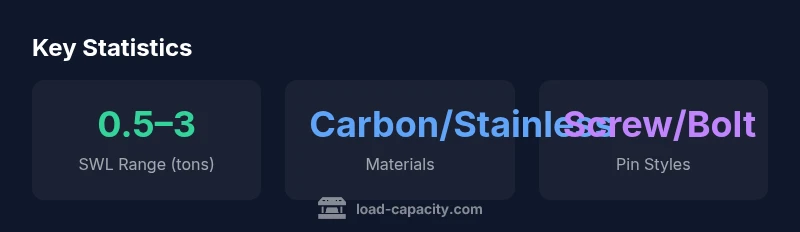
| Screw pin | 0.25–2.0 tons | General rigging and lifts |
| Bolt pin | 0.5–3.0 tons | Heavy-duty lifts and rugged environments |
| D-ring shackles | N/A | Temporary lashing and dual-point rigging |
Quick Answers
What does 3 4 shackle capacity mean?
It refers to shackles sized around three quarters of an inch with published load ratings. Ratings vary by model and manufacturer, so always read the tag and apply a safety margin.
3 4 shackle capacity means the shackle is around 3/4 inch in size and has a published load rating that varies by maker; read the tag and plan with a safety margin.
How do I choose the right shackle size for a lift?
Start with the expected load and angle, then select a shackle whose rating comfortably exceeds the load. Consider material, pin type, and environmental factors. Always follow the manufacturer’s rating and your project’s safety factors.
Pick a shackle that exceeds your load and angle, and check the tag. Safety margins matter.
Why do shackles from different manufacturers vary in capacity?
Differences in material, neck design, heat treatment, and tolerances cause ratings to differ. Always rely on the specific tag for the exact capacity.
Different makers build different shackle designs, so read the tag for exact capacity.
Can I reuse a shackle after a minor inspection, if it looks OK?
No. Any sign of wear, deformation, or corrosion warrants removal and replacement. Regular inspection protocols are essential for safety.
If you spot wear or damage, replace it. Don’t reuse questionable shackles.
What maintenance should shackles receive?
Regular cleaning, corrosion checks, and periodic torque checks on the pin are recommended. Replace any damaged or worn parts.
Keep shackles clean and inspect the pin. Replace damaged parts.
What checks should be done before a lift?
Confirm rating tags, inspect for damage, ensure proper fit with slings, and verify the lift angle won’t overstress the shackles.
Check tags, inspect for damage, and verify angles before lifting.
“Rigging work is only as safe as the rating on the shackle tag. Never exceed the published SWL, and always plan for the worst‑case load scenario.”
Top Takeaways
- Verify the rating tag on every shackle before use.
- Apply a safety factor appropriate to your lift and environment.
- Angles and load distribution dramatically affect effective capacity.
- Choose materials and pin styles suited to your environment and maintenance plan.